A concrete house will often look as any other from the same period, but there are a few signs that will give away its construction.
Date of construction
Concrete as a house building material didn’t really come about until the early twentieth century. Although there was at least one disastrous experiment with mass unreinforced concrete in the 1880s (see Babbage’s Castle), the earliest ‘whole’ concrete house was built c.1905.
Reinforced concrete for footings and floor slabs is today the most popular method of construction in Australia but methods that involved all the superstructure (footings, floors, walls, chimneys, verandah posts) dropped off in the 1950s.
So, a date of construction somewhere between 1900 and 1950 is the most likely period for a concrete house.
Panel joints
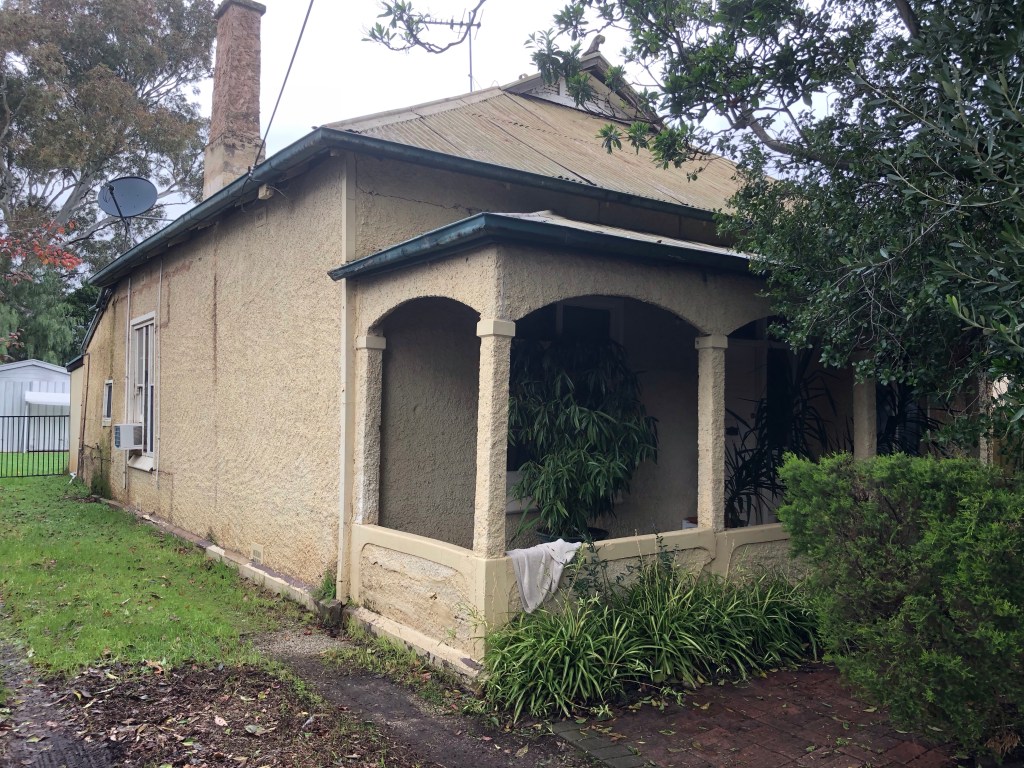
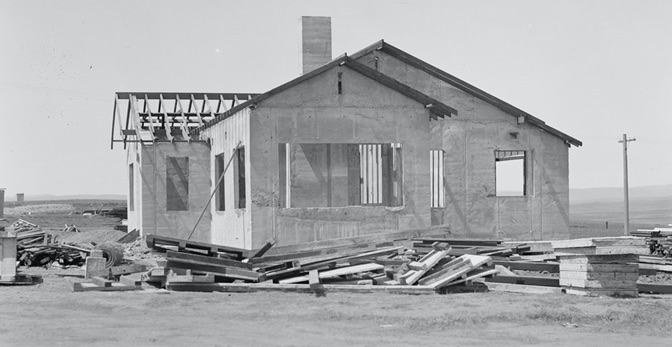
Most walls for concrete houses were built using forms, or moulds, bolted together into which the concrete was poured. They were either full height, as in the Monolyte system, or part height and lifted for each pour. Others were built by casting slabs that were stood up and bolted in place before a cast ring beam was poured on top. These processes left a panelised pattern for the walls which was generally not considered desirable and the walls were covered with a wet dash render to create a more uniform appearance. However, not all joints were covered in every case. Monolyte houses have distinctive coved banding that must have related to the mould shape. Houses built as panels also have begun to show the panel joint lines, such as the Duplex Building Company houses on Fuller Street, Parkside, shown below.

Cast in window sills, window surrounds & skirtings
Not in all cases, but in many early examples of cast-in place-houses, the window sills and surrounds were included in the wall moulds. Shallow, but steeply sloping window sills that appear integral to the wall, is a strong indicator of an early concrete house. In the Monolyte houses, the internal skirtings were also cast as part of the wall. Later on, as it proved more difficult to remain competitive with other forms of construction, the moulds were simplified to exclude the more intricate details.
Verandah posts & chimneys
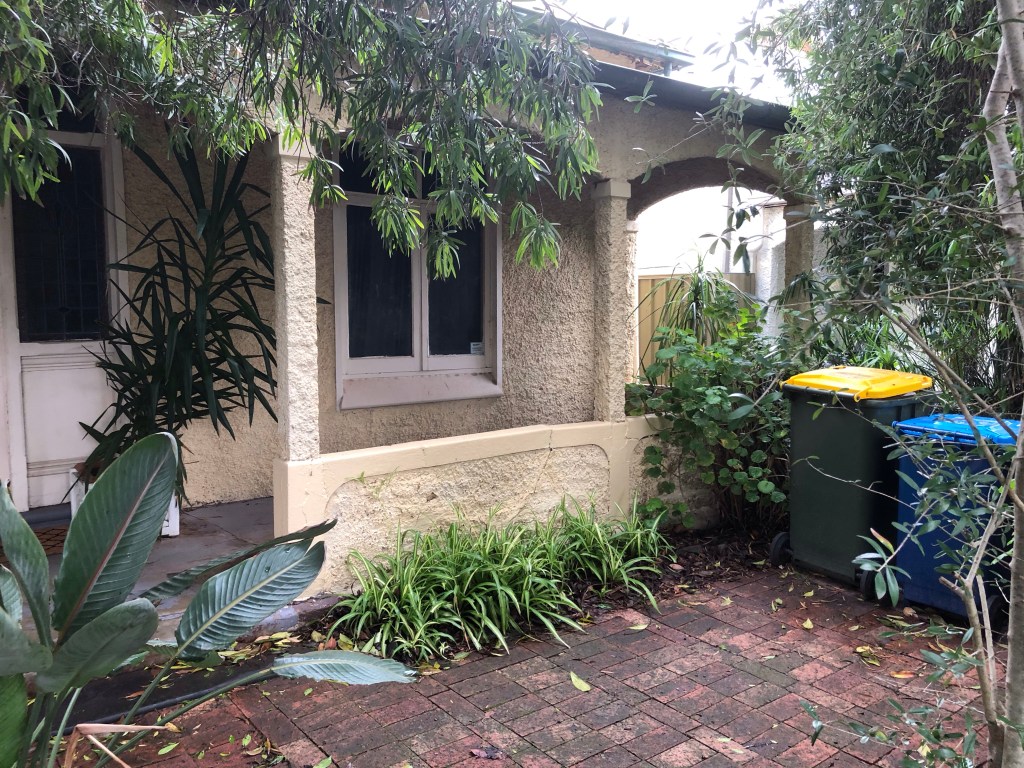
In the spirit of demonstrating that it was possible to construct even the more detailed architectural elements, the early houses often featured cast concrete chimneys and verandah posts. The chimneys tended to be more successful, but verandah posts such as the ones shown above were less so, and probably because of their slender design and lack of cover on steel reinforcing, did not survive. Below is a house of the same type as 29 Fuller St (pictured above) with a completely rebuilt verandah.

Conclusion
When driving by these experimental houses, they can appear like any others in the same street. Undoubtedly this is the result of attempts to demonstrate that concrete could be used to build a house of equal quality to brick or stone construction, but faster and cheaper. But, a closer look at the details gives away their unusual construction.
 Concrete Houses of Australia